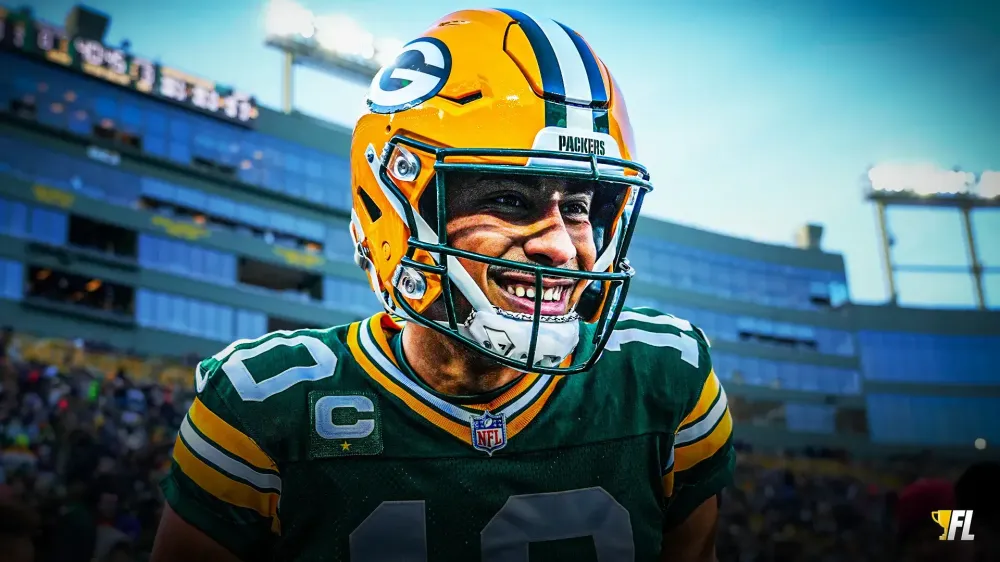
Packers Team Needs For The 2026 Offseason: Beef Up Both Lines
Ian Hartitz breaks down what the Packers can do during the 2026 offseason to set themselves up for success come Week 1 kickoff.
The Packers looked a lot like one of the top contenders in the entire NFC after 14 weeks of action: 9-3-1 and riding a four-game win streak that included wins over each of their NFC North foes. What could go wrong?
Well, a lot—primarily all-world EDGE Micah Parsons suffering a season-ending knee injury, and Jordan Love missing time with a concussion and shoulder injury. Five consecutive losses later, and Matt LaFleur and company were once again sent home far sooner than most cheeseheads expected.
- 2025: 9-7-1 (+31 point differential, preseason win total: 9.5)
- Points per game: 23 (16th)
- EPA per pass: +0.27 (2nd)
- EPA per rush: -0.08 (21st)
- Points per game against: 21.2 (11th)
- EPA per pass against: +0.12 (22nd)
- EPA per rush against: -0.06 (18th)
The good news is that this squad looked capable of playing with anyone at full health last season. The bad news is that they might be forced to mostly just rely on last season's roster getting the job done in 2026, as this franchise has very little cap room to work with, and only has two draft picks inside the top-120 selections due to the Parsons trade.
What Do The Green Bay Packers Need To Address In The 2026 Offseason?
Need 1: Offensive Line
LT Rasheed Walker, RG/C Sean Rhyan and swing tackle Darian Kinnard (RFA) are all hitting the open market. It's possible the front office simply brings back all three parties and hopes that another year of cohesion and growth leads to better results, but a high-end talent infusion here might be worthwhile considering the overall effectiveness of the offensive line slipped in a meaningful way last season.
- 2025: PFF's 19th-ranked offensive line
- 2024: 6th
- 2023: 11th
- 2022: 3rd
- 2021: 14th
Getting better at protecting Jordan Love is particularly important, considering just how volatile his splits were when under pressure vs. when kept clean. Consider: Love was ELITE and posted the league's best EPA per dropback (+0.55) when given the benefit of a clean pocket, but he slipped all the way to 21st (-0.29) when under duress among 38 qualified quarterbacks last season.
Need 2: Interior Defensive Line
Obviously, having a healthy Micah Parsons will lift the performance level of all defensive linemen involved due to the amount of double-teams the ex-Cowboy regularly pulls his way, but adding someone to really help replace Kenny Clark still makes sense. This run defense was exposed at times down the stretch. Obviously, the massive eruptions came from king Derrick Henry (36 rushes-216 yards-4 TD) and Rico Dowdle (25-130-2), but the Giants, Vikings and Bears (x2) also all managed to clear 130 rushing yards against Green Bay from November on last season.
Paying Parsons leaves the Packers with the league's sixth-most expensive collection of EDGE defenders entering 2026, but they accordingly have the 12th-cheapest group of interior defenders. Nobody is suggesting Green Bay blows the bank on adding a big-bodied run stuffer, but adding mid-priced pieces in free agency and/or the draft is probably a good idea considering how much worse this defense was against the run (28th in success rate allowed) compared to the pass (13th) in 2025.
Need 3: Linebacker
Many of the same points from Need No. 2 apply here: Adding bodies to the front-seven to help shore up the run defense looks like one of the clearer ways for this team to immediately improve in 2026. Former first-rounder/starting LB Quay Walker is hitting free agency, leading to the Packers having the eighth-fewest 2026 dollars devoted to their linebacker room at the moment.
Honorable Mention
WR Romeo Doubs is hitting free agency coming off a career-best season, and he could demand a surprisingly solid bag considering the relative lackluster free agent class at the position. Replacing Doubs is probably as easy as elevating 2025 first-rounder Matthew Golden to the starting lineup alongside Christian Watson and Jayden Reed; just realize this pass-catching crew as a whole has had trouble staying healthy in recent seasons, and the Packers boast the sixth-cheapest group of wide receivers and tight ends entering 2026. … Cornerback is also something that could probably use a bit of help, considering the team experimented with moving Bo Melton to that side of the ball in the preseason, and later felt the need to add ex-Cowboy Trevon Diggs before their Wild Card loss to the Bears.
If I were the GM …
I'd deploy a best-player-available strategy with the team's second- and third-round picks, ideally finding a quality offensive lineman and someone to help improve the front seven. There's no need to completely overhaul anything here—Green Bay was a blown fourth quarter away from advancing to the Divisional Round after all—but getting the trenches back to being major strengths feels important for a team that will continue to be forced to battle the elements during their late-season tests.

Join Our Newsletter
Trusted by 400,000+ fantasy football players. Get access to Fantasy Life's free award winning newsletter and tools, all in one step.
By registering or logging in, you agree to our Terms of Use and Privacy Policy.
Players Mentioned in this Article
 MicahParsonsDLGB
- PPG
- 0.00
 JordanLoveQBGB
- PPG
- 14.10
 RasheedWalkerTGB
- PPG
- 0.00
 SeanRhyanGGB
- PPG
- 0.00