NFL Offense Rankings: Key Contributors for Each Core Offensive Unit in 2024
Matthew Freedman ranks every NFL team's projected key contributors, with thoughts on each offense for 2024.
Each NFL offseason, I analyze all 32 NFL offenses to get a sense for how to assess them in the betting markets and fantasy sports.
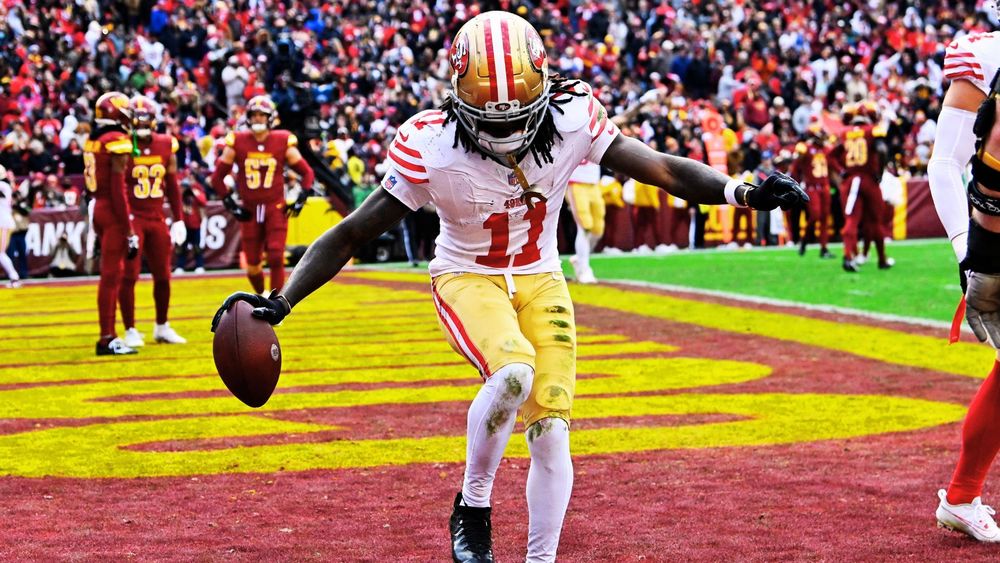
1. San Francisco 49ers
- Playcaller: HC/OC Kyle Shanahan
- QBs: Brock Purdy, Josh Dobbs
- RBs: Christian McCaffrey, Elijah Mitchell, Isaac Guerendo, FB Kyle Juszczyk
- WRs: Deebo Samuel, Brandon Aiyuk, Ricky Pearsall, Jauan Jennings
- TE: George Kittle
- OL: LT Trent Williams, LG Aaron Banks, C Jake Brendel, RG Jon Feliciano, RT Colton McKivitz
Last year the 49ers were No. 1 with 6.6 yards per play (YPP), 0.179 expected points added per play (EPA) and a 51.6% success rate (SR). This year they return the entire core of their offense and almost all their offensive coaches. Game on.
2. Dallas Cowboys
- Playcaller: HC Mike McCarthy
- OC: Brian Schottenheimer
- QBs: Dak Prescott, Cooper Rush
- RBs: Ezekiel Elliott, Rico Dowdle, Deuce Vaughn, FB Hunter Luepke
- WRs: CeeDee Lamb, Brandin Cooks, Jalen Tolbert
- TE: Jake Ferguson
- OL: LT Tyler Guyton, LG Tyler Smith, C Cooper Beebe, RG Zack Martin, RT Terence Steele
The Cowboys were No. 1 last year in points per game (29.9) as Prescott finished No. 2 in NFL MVP voting and Lamb earned First-Team All-Pro. They have continuity: All their projected contributors (minus the returning Elliott and the rookies Guyton and Beebe) were on the team last year. But Tolbert is a backup-level player in a starting role, Guyton is raw and Beebe's shift to C is a projection. The Cowboys likely will continue to produce, but they could be volatile overall and disappointing in the run game.
3. Miami Dolphins
- Playcaller: HC Mike McDaniel
- OC: Frank Smith
- QBs: Tua Tagovailoa, Mike White
- RBs: Raheem Mostert, De’Von Achane, Jaylen Wright, FB Alec Ingold
- WRs: Tyreek Hill, Jaylen Waddle, Odell Beckham, Braxton Berrios
- TEs: Jonnu Smith, Durham Smythe
- OL: LT Terron Armstead, LG Isaiah Wynn, C Aaron Brewer, RG Robert Jones, RT Austin Jackson
The Dolphins had top-five marks last year in YPP (6.5), EPA (0.095) and SR (47.4%), and they’ve upgraded WR and TE by adding Beckham and Smith. While they could be vulnerable in their interior OL with the departures of RG Robert Hunt and C Connor Williams, the sharp McDaniel has shown an ability through two years to game-plan around weaknesses.
4. Baltimore Ravens
- Playcaller: OC Todd Monken
- QBs: Lamar Jackson, Josh Johnson
- RBs: Derrick Henry, Keaton Mitchell, FB Patrick Ricard
- WRs: Zay Flowers, Rashod Bateman, Nelson Agholor, Devontez Walker
- TEs: Mark Andrews, Isaiah Likely
- OL: LT Ronnie Stanley, LG Andrew Vorhees, C Tyler Linderbaum, RG Ben Cleveland, RT Roger Rosengarten
The Ravens lost RT Morgan Moses, LG John Simpson and RG Kevin Zeitler this offseason. That’s concerning, especially since the team’s two-time MVP QB (2019, '23) has missed significant time in two of the past three seasons. And the Ravens always seem to need more pass-catchers no matter how many they draft in Round 1. But as long as Jackson, Henry and Andrews remain healthy, this offense should truck.
5. Detroit Lions
- Playcaller: OC Ben Johnson
- QBs: Jared Goff, Hendon Hooker
- RBs: Jahmyr Gibbs, David Montgomery
- WRs: Amon-Ra St. Brown, Jameson Williams, Kalif Raymond
- TE: Sam LaPorta
- OL: LT Taylor Decker, LG Graham Glasgow, C Frank Ragnow, RG Kevin Zeitler, RT Penei Sewell
The Lions have been top-five in YPP (5.9, 5.9) in two seasons with Johnson as the coordinator, they’re loaded with young skill talent (Gibbs, St. Brown, Williams, LaPorta) and they possess one of the league’s best OLs. As good as they were last year, they might be better this year.
6. Kansas City Chiefs
- Playcaller: HC Andy Reid
- OC: Matt Nagy
- QBs: Patrick Mahomes, Carson Wentz
- RBs: Isiah Pacheco, Clyde Edwards-Helaire
- WRs: Marquise Brown, Rashee Rice, Xavier Worthy, Justin Watson, Kadarius Toney
- TEs: Travis Kelce, Noah Gray
- OL: LT Kingsley Suamataia, LG Joe Thuney, C Creed Humphrey, RG Trey Smith, RT Jawaan Taylor
The Chiefs disappointed last year (No. 15 with 21.8 PPG), but they still have perhaps the best play-caller/QB combo in league history, and they upgraded WR by replacing Marquez Valdes-Scantling and Watson with Brown and Worthy. An offense with Mahomes is more likely to outperform than not.
7. Buffalo Bills
- Playcaller: OC Joe Brady
- QBs: Josh Allen, Mitch Trubisky
- RBs: James Cook, Ray Davis, Ty Johnson
- WRs: Keon Coleman, Curtis Samuel, Khalil Shakir
- TEs: Dalton Kincaid, Dawson Knox
- OL: LT Dion Dawkins, LG David Edwards, C Connor McGovern, RG O’Cyrus Torrence, RT Spencer Brown
The Bills parted ways with WRs Stefon Diggs and Gabe Davis this offseason, but they still have one of the league’s best QBs, strong OL continuity and four potential emerging playmakers (Cook, Kincaid, Coleman, Shakir). The burden will be on Brady to maximize Allen’s potential.
8. Philadelphia Eagles
- Playcaller: OC Kellen Moore
- QBs: Jalen Hurts, Kenny Pickett
- RBs: Saquon Barkley, Kenny Gainwell, Will Shipley
- WRs: A.J. Brown, DeVonta Smith, Parris Campbell, DeVante Parker, Ainias Smith
- TE: Dallas Goedert
- OL: LT Jordan Mailata, LG Landon Dickerson, C Cam Jurgens, RG Tyler Steen, RT Lane Johnson
The Eagles lost franchise C Jason Kelce to retirement, and they enter this season with their fifth offensive playcaller in five years, but the OL is still stable and they sport arguably the league’s best skill quintet (Hurts, Barkley, Brown, Smith, Goedert). The Eagles might not return to their 2022 form (No. 2 EPA, 0.114), but they probably will be better than they were in 2023 (No. 9 EPA, 0.051).
9. Los Angeles Rams
- Playcaller: HC Sean McVay
- OC: Mike LaFleur
- QBs: Matthew Stafford, Stetson Bennett
- RBs: Kyren Williams, Blake Corum
- WRs: Puka Nacua, Cooper Kupp, Demarcus Robinson, Tutu Atwell
- TEs: Tyler Higbee, Colby Parkinson
- OL: LT Alaric Jackson, LG Jonah Jackson, C Steve Avila, LG Kevin Dotson, RT Rob Havenstein
The Rams have rebuilt their OL over the past 18 months, and in their two years with a healthy Stafford (2021, '23), they’ve been No. 8 in offensive EPA (0.067, 0.053). With the dynamic trio of Nacua, Kupp and Williams, the innovative McVay should be able to McMastermind yet another productive season out of Stafford, provided the 36-year-old veteran stays healthy.
10. Cincinnati Bengals
- Playcaller: HC Zac Taylor
- OC: Dan Pitcher
- QBs: Joe Burrow, Jake Browning
- RBs: Zack Moss, Chase Brown
- WRs: Ja’Marr Chase, Tee Higgins, Jermaine Burton, Trent Irwin, Andrei Iosivas, Charlie Jones
- TEs: Mike Gesicki, Erick All
- OL: LT Orlando Brown, LG Cordell Volson, C Ted Karras, RG Alex Cappa, RT Trent Brown
Injuries to Burrow (calf, wrist) plagued the team’s 2023 campaign, but in 2022, the Bengals were No. 4 in EPA (0.085). They upgraded RT, TE and arguably RB this offseason, they fortified the OL in Round 1 with backup OT Amarius Mims and they kept the playmaking pass-game trio of Burrow, Chase and Higgins intact. The primary question with the Bengals is playcalling: Can Taylor coach as well as his stars play?
11. Houston Texans
- Playcaller: OC Bobby Slowik
- QBs: C.J. Stroud, Davis Mills
- RBs: Joe Mixon, Dameon Pierce, FB Andrew Beck
- WRs: Stefon Diggs, Nico Collins, Tank Dell, Robert Woods, Noah Brown, John Metchie
- TEs: Dalton Schultz, Brevin Jordan, Cade Stover
- OL: LT Laremy Tunsil, LG Tytus Howard, C Juice Scruggs, RG Shaq Mason, RT Blake Fisher
One all-time great rookie campaign does not a Hall of Famer make, but Stroud looked like a franchise savior in 2023 with his league-high 273.9 passing yards per game and league-low 1.0% INT rate. The Texans should benefit from coordinator continuity with Slowik returning for a second season, and they have the league’s deepest WR unit. As long as their interior OL holds up, the Texans should improve upon last year’s No. 13 finish in YPP (5.4) and PPG (22.2).
12. Green Bay Packers
- Playcaller: HC Matt LaFleur
- OC: Adam Stenavich
- QBs: Jordan Love, Sean Clifford
- RBs: Josh Jacobs, A.J. Dillon, MarShawn Lloyd
- WRs: Christian Watson, Jayden Reed, Romeo Doubs, Dontayvion Wicks, Bo Melton
- TEs: Luke Musgrave, Tucker Kraft
- OL: LT Rasheed Walker, LG Elgton Jenkins, C Josh Myers, RG Jordan Morgan, RT Zach Tom
The team’s succession plan worked to perfection in 2023, as Love took over for the traded Aaron Rodgers and passed for 4,159 yards and 32 TDs in his first year as a starter. Jacobs might be a downgrade on released stalwart Aaron Jones, and the OL could still use some upgrades, but Love and his slew of emerging pass-catchers provide the Packers with an elevated offensive floor and vaulted theoretical ceiling.
13. New York Jets
- Playcaller: OC Nathaniel Hackett
- QBs: Aaron Rodgers, TyRod Taylor
- RBs: Breece Hall, Braelon Allen, Israel Abanikanda, FB Nick Bawden
- WRs: Garrett Wilson, Mike Williams, Allen Lazard, Malachi Corley, Xavier Gipson
- TEs: Tyler Conklin, Jeremy Ruckert
- OL: LT Tyron Smith, LG John Simpson, C Joe Tippmann, RG Alijah Vera-Tucker, RT Morgan Moses
With the return of Rodgers (Achilles), the Jets could have a top-five offense given how explosive Wilson and Hall are and how the team has rebuilt the OL (four new Week 1 starters plus Round 1 OT Olumuyiwa Fashanu as a backup). At the same time, what are the odds Hackett suddenly learns how to call plays, Smith and Moses (both 33 years old) stay healthy the entire year and the recovering and routinely unavailable Williams (knee) and Vera-Tucker (Achilles) don’t suffer impactful injuries? Not good.
14. Cleveland Browns
- Playcaller: HC Kevin Stefanski
- OC: Ken Dorsey
- QBs: Deshaun Watson, Jameis Winston, Tyler Huntley
- RBs: Nick Chubb, Jerome Ford, D'Onta Foreman
- WRs: Amari Cooper, Jerry Jeudy, Elijah Moore, Cedric Tillman
- TEs: David Njoku, Jordan Akins
- OL: LT Jedrick Wills, LG Joel Bitonio, C Ethan Pocic, RG Wyatt Teller, RT Jack Conklin
With a two-time Coach of the Year (2020, '23), the Browns have maintained a league-average offense over the past two seasons despite poor QB performance. Watson has played just 12 games since joining the team and seems unlikely to regain his 2020 form (league-high 4,823 yards), but the Browns should still be serviceable on offense thanks to their upside-laden skill players and beastly OL.
15. Atlanta Falcons
- Playcaller: OC Zac Robinson
- QBs: Kirk Cousins, Michael Penix
- RBs: Bijan Robinson, Tyler Allgeier
- WRs: Drake London, Darnell Mooney, Rondale Moore, KhaDarel Hodge
- TE: Kyle Pitts
- OL: LT Jake Matthews, LG Matthew Bergeron, C Drew Dalman, RG Chris Lindstrom, RT Kaleb McGary
Robinson is a first-time playcaller, but he joins the Falcons after spending a half decade with McVay as an assistant and multiple years at Pro Football Focus as an analyst: He has potential. He also has weapons, including an above-average veteran pocket passer, a skill cohort full of recent top-eight selections (Robinson, London, Pitts, Penix) and a near-elite OL returning all five starters. The unit would have benefited more this year if the team had used its Round 1 pick on someone likely to play right away (instead of a backup QB), and the offense might need time to coalesce, but it should be solid.
16. Chicago Bears
- Playcaller: OC Shane Waldron
- QBs: Caleb Williams, Tyson Bagent
- RBs: D'Andre Swift, Khalil Herbert, Roschon Johnson
- WRs: D.J. Moore, Keenan Allen, Rome Odunze
- TEs: Cole Kmet, Gerald Everett
- OL: LT Braxton Jones, LG Teven Jenkins, C Ryan Bates, RG Nate Davis, RT Darnell Wright
The Bears have a Heisman Trophy-winning dual-threat rookie QB, a strong supporting cast of skill players, a sufficient OL and the playcaller who revived Geno Smith’s career with the Seahawks. There likely will be a transitional period as Williams and Odunze adapt to the NFL and the team adjusts to a new OC, but the Bears could positively surprise in 2023.
17. Indianapolis Colts
- Playcaller: HC Shane Steichen
- OC: Jim Bob Cooter
- QBs: Anthony Richardson, Joe Flacco
- RBs: Jonathan Taylor, Trey Sermon, Evan Hull
- WRs: Michael Pittman, Josh Downs, Adonai Mitchell, Alec Pierce
- TEs: Jelani Woods, Kylen Granson, Mo Alie-Cox
- OL: LT Bernhard Raimann, LG Quenton Nelson, C Ryan Kelly, RG Will Fries, RT Braden Smith
The offense returns all its starters and coaches, so Steichen’s unit could improve upon last year’s No. 14 finish in YPP (5.2). He has a top-eight OL, a workhorse back and a reliable No. 1 WR. Entering the second year of his tenure, Steichen has just one question to answer: After missing all but four games in 2023, is the intriguing Richardson ready to become a franchise QB in 2024?
18. Jacksonville Jaguars
- Playcaller: OC Press Taylor
- QBs: Trevor Lawrence, Mac Jones
- RBs: Travis Etienne, D'Ernest Johnson, Tank Bigsby
- WRs: Christian Kirk, BrIan Thomas, Gabe Davis
- TEs: Evan Engram, Brenton Strange, Luke Farrell
- OL: LT Cam Robinson, LG Ezra Cleveland, C Mitch Morse, RT Brandon Scherff, RT Anton Harrison
The Jaguars regressed in 2023, dropping from No. 7 in EPA (0.043) the year prior to No. 19 (-0.032) as HC Doug Pederson transferred playcalling duties to Taylor. But they could bounce back this season: Taylor has more experience, Lawrence still has “promised prince” upside and the team has a solidified OL and average-at-worst skill player assemblage boosted with the Round 1 addition of Thomas. A productivity rebound isn’t assured, but it’s conceivable.
19. Arizona Cardinals
- Playcaller: OC Drew Petzing
- QBs: Kyler Murray, Desmond Ridder
- RBs: James Conner, Trey Benson
- WRs: Marvin Harrison, Michael Wilson, Greg Dortch, Zach Pascal
- TEs: Trey McBride, Tip Reiman
- OL: LT Paris Johnson, LG Elijah Wilkinson, C Hjalte Froholdt, RG Will Hernandez, RT Jonah Williams
Once Murray (knee) returned to action last year, the Cardinals were encouragingly No. 9 in EPA (0.046) in their final eight games, and they kept their coaching staff intact this offseason. The OL is a liability, but at least it has continuity, and the skill group boasts a three-down veteran RB, a generational WR prospect and a breakout TE. This offense could collapse on itself under the weight of uncertainty and incompetence, or it could catapult itself into the top 10.
20. Seattle Seahawks
- Playcaller: OC Ryan Grubb
- QBs: Geno Smith, Sam Howell
- RBs: Kenneth Walker, Zach Charbonnet
- WRs: D.K. Metcalf, Tyler Lockett, Jaxon Smith-Njigba
- TEs: Noah Fant, Pharaoh Brown
- OL: LT Charles Cross, LG Laken Tomlinson, C Nick Harris, RG Christian Haynes, RT Abraham Lucas
The Seahawks were No. 10 in EPA (0.031) and SR (44.6%) last year, but that was with a different OC. The team has a borderline top-10 skill cohort, but the OL is vulnerable (especially on the interior), the new OC has never coached (much less called plays) in the NFL, and his boss is a first-year defensive-minded HC (Mike Macdonald). There’s upside, but it might be outweighed by downside.
21. Minnesota Vikings
- Playcaller: HC Kevin O’Connell
- OC: Wes Phillips
- QBs: J.J. McCarthy, Sam Darnold
- RBs: Aaron Jones, Ty Chandler
- WRs: Justin Jefferson, Jordan Addison, Brandon Powell, Trent Sherfield
- TEs: T.J. Hockenson, Josh Oliver
- OL: LT Christian Darrisaw, LG Blake Brandel, C Garrett Bradbury, RG Ed Ingram, RT Brian O'Neill
The Vikings have finished No. 11 in YPP (5.5) in both seasons under O’Connell, and he returns all his offensive position coaches for a third year. They have the league’s best WR, a stable OL and an upgraded RB. But they don’t have QB Kirk Cousins, who departed this offseason after six underappreciated seasons with the team. McCarthy has potential, but he's a rookie who didn't throw often in college and might not start Week 1. Given their QB situation, a unit-wide downgrade seems likely.
22. Los Angeles Chargers
- Playcaller: OC Greg Roman
- QBs: Justin Herbert, Easton Stick
- RBs: Gus Edwards, J.K. Dobbins, Isaiah Spiller, Kimani Vidal, FB Ben Mason
- WRs: Ladd McConkey, Josh Palmer, Quentin Johnston, D.J. Chark
- TEs: Hayden Hurst, Will Dissly
- OL: LT Rashawn Slater, LG Zion Johnson, C Bradley Bozeman, RG Jamaree Salyer, RT Joe Alt
This offseason, the Chargers parted ways with OC Kellen Moore, RB Austin Ekeler, WRs Keenan Allen and Mike Williams and TE Gerald Everett, but they still have a top-eight QB and serviceable OL bookended by a Pro-Bowl LT and Round 1 RT. HC Jim Harbaugh and Roman have had success everywhere they’ve been, but their run-heavy inclinations could make Herbert a glorified game manager and cap the offense's explosiveness.
23. Tampa Bay Buccaneers
- Playcaller: OC Liam Coen
- QBs: Baker Mayfield, Kyle Trask
- RBs: Rachaad White, Bucky Irving, Chase Edmonds
- WRs: Mike Evans, Chris Godwin, Jalen McMillan, Trey Palmer
- TE: Cade Otton
- OL: LT Tristan Wirfs, LG Graham Barton, C Robert Hainsey, RG Cody Mauch, RT Luke Goedeke
The Buccaneers were No. 12 in EPA (0.020) last year as Mayfield enjoyed a career renaissance (4,044 yards passing), and this year they return 10 offensive starters. But gone is OC Dave Canales (along with half his offensive staff), and replacing him is Coen, who lasted just one (terrible) year as Sean McVay’s OC (2022) and has never called plays in the NFL. The Bucs have supporting talent (Evans, Godwin, White, Wirfs), but without his 2023 playcaller, Mayfield (and the offense) is a strong 2024 regression candidate.
24. New Orleans Saints
- Playcaller: OC Klint Kubiak
- QBs: Derek Carr, Jake Haener
- RBs: Alvin Kamara, Jamaal Williams, KenDre Miller
- WRs: Chris Olave, Rashid Shaheed, A.T. Perry, Cedrick Wilson
- TEs: Juwan Johnson, Taysom Hill, Foster Moreau
- OL: LT Taliese Fuaga, LG Trevor Penning, C Erik McCoy, RG Cesar Ruiz, RT Ryan Ramczyk
The Saints likely upgraded OC in adding Kubiak (2023 49ers pass-game coordinator), and the team has a tantalizing collection of skilled playmakers, but Carr is now on his fourth playcaller in four years, and the OL is vulnerable: Penning hasn’t developed as desired (and might move from OT to G or the bench), Ramczyk (knee) might be unavailable and T/Gs Andrus Peat (free agency) and James Hurst (retirement) are gone. The Saints were No. 19 last year in YPP (5.1), but when a team’s best play is, “Let’s get Taysom the ball,” the offense will probably get worse before it gets better.
25. Denver Broncos
- Playcaller: HC Sean Payton
- OC: Joe Lombardi
- QBs: Bo Nix, Jarrett Stidham, Zach Wilson
- RBs: Javonte Williams, Samaje Perine, Jaleel McLaughlin, Audric Estime
- WRs: Courtland Sutton, Marvin Mims, Troy Franklin, Tim Patrick, Josh Reynolds
- TEs: Adam Trautman, Greg Dulcich
- OL: LT Garett Bolles, LG Ben Powers, C Sam Mustipher, RG Quinn Meinerz, RT Mike McGlinchey
The Broncos were No. 15 in SR (42.3%) last year, and even without a proven starting NFL QB, Payton and company likely will exceed expectations this year: His record against the spread without QBs Drew Brees and Russell Wilson is 19-12, and his rookie QB has an acceptable supporting cast. This offseason, Payton retained his entire offensive staff, and he added longtime consigliere Pete Carmichael. The offense is unlikely to be good, but it probably won’t be terrible.
26. Pittsburgh Steelers
- Playcaller: OC Arthur Smith
- QBs: Russell Wilson, Justin Fields
- RBs: Najee Harris, Jaylen Warren, Cordarrelle Patterson
- WRs: George Pickens, Roman Wilson, Van Jefferson
- TEs: Pat Freiermuth, Connor Heyward, Darnell Washington
- OL: LT Troy Fautanu, LG Isaac Seumalo, C Zach Frazier, RG James Daniels, RT Broderick Jones
This offseason, the Steelers traded two nickels for 10 pennies by replacing OC Matt Canada and QB Kenny Pickett with Smith and Wilson. Vanilla tastes vanilla. The team drastically improved the OL in the draft, and Smith’s run-heavy scheme (as we saw with the 2021-23 Falcons) will theoretically “protect” (hide?) his QB, but it could also hinder the offense overall. Competence is the best-case scenario; catastrophe, the worst-case.
27. Carolina Panthers
- Playcaller: HC Dave Canales
- OC: Brad Idzik
- QBs: Bryce Young, Andy Dalton
- RBs: Jonathon Brooks, Chuba Hubbard, Miles Sanders, Rashaad Penny
- WRs: Diontae Johnson, Adam Thielen, Xavier Legette, Jonathan Mingo
- TE: Tommy Tremble, Ja'Tavion Sanders, Ian Thomas
- OL: LT Ikem Ekwonu, LG Damien Lewis, C Austin Corbett, RG Robert Hunt, RT Taylor Moton
The Panthers were dead last in YPP (4.1) and PPG (13.9) last season, but they should improve this year thanks to a new coaching staff, a slew of key additions (Johnson, Legette, Brooks, Sanders, Lewis and Hunt) and the natural development of Young in his second season. As the 2022 Seahawks QBs coach and 2023 Buccaneers OC, Canales invigorated Geno Smith and Baker Mayfield: Maybe he can do the same with Young. But the supporting skill talent is debatable, and Young underwhelmed as a rookie. This offense won’t be the league's worst, but it likely won’t be good.
28. Washington Commanders
- Playcaller: OC Kliff Kingsbury
- QBs: Jayden Daniels, Marcus Mariota
- RBs: Brian Robinson, Austin Ekeler
- WRs: Terry McLaurin, Jahan Dotson, Luke McCaffrey, Olamide Zaccheaus
- TE: Zach Ertz, Ben Sinnott
- OL: LT Cornelius Lucas, LG Nick Allegretti, C Tyler Biadasz, RG Sam Cosmi, RT Andrew Wylie
Thanks to their offseason moves, the Commanders now have a league-average (or thereabouts) OC, OL and skill-position group. The problem is they have a rookie QB, a new scheme, a new playcaller and as many as six new offensive starters. The Commanders have little continuity and no guarantee that Daniels and the rest of the offense will excel in Kingsbury’s system. Mediocrity would be an improvement on last year (No. 25 in EPA at -0.084), but inadequacy and volatility seem just as likely.
29. Tennessee Titans
- Playcaller: HC Brian Callahan
- OC: Nick Holz
- QBs: Will Levis, Mason Rudolph, Malik Willis
- RBs: Tony Pollard, Tyjae Spears
- WRs: DeAndre Hopkins, Calvin Ridley, Tyler Boyd, Nick Westbrook-Ikhine, Treylon Burks, Kyle Philips
- TE: Chigoziem Okonkwo, Josh Whyle
- OL: LT J.C. Latham, LG Peter Skoronski, C Lloyd Cushenberry, RG Daniel Brunskill, RT Dillon Radunz
The Titans have a first-time HC who has never called plays in the NFL, and his offense — now stripped of dominant longtime RB Derrick Henry — features an unproven QB, an uncertain OL and aging WRs. Levis flashed potential as a rookie, OL coach Bill Callahan (Brian’s father) regularly maximizes his units and Hopkins, Ridley and Boyd are proven veterans, so it's not all bad. But putting a rookie HC/playcaller with a young developing QB feels like a bad idea.
30. New York Giants
- Playcaller: OC Mike Kafka
- QBs: Daniel Jones, Drew Lock
- RBs: Devin Singletary, Tyrone Tracy, Eric Gray, Gary Brightwell
- WRs: Malik Nabers, Wan'Dale Robinson, Jalin Hyatt, Darius Slayton
- TE: Darren Waller, Daniel Bellinger, Theo Johnson
- OL: LT Andrew Thomas, LG Aaron Stinnie, C John Michael Schmitz, RG Jon Runyan, RT Jermaine Eluemunor
Brian Daboll is one of the NFL’s few offensive-minded HCs who doesn’t call plays, but the system is still his, and last year it was bottom-three in YPP (4.5), PPG (15.6), EPA( -0.165) and SR (38.2%). Granted, his starting QB was injured for most of the season, but Jones (knee) didn’t play well when healthy (151.5 yards passing, one INT per game) and his rushing ability — his greatest asset — might be diminished after his ACL tear. The Giants don't have a single above-average unit across the entire offense and are especially weak at the skill positions with the potential retirement of Waller. Daboll supercharged the offense in 2022 when he won Coach of the Year, but he might not make it to 2025.
31. Las Vegas Raiders
- Playcaller: OC Luke Getsy
- QBs: Gardner Minshew, Aidan O'Connell
- RBs: Zamir White, Alexander Mattison, Ameer Abdullah, Dylan Laube
- WRs: Davante Adams, Jakobi Meyers, Tre Tucker, Michael Gallup
- TE: Brock Bowers, Michael Mayer, Harrison Bryant
- OL: LT Kolton Miller, LG Dylan Parham, C Andre James, RG Jackson Powers-Johnson, RT Thayer Munford
The Raiders aren’t destitute. Getsy is new to the team, but at least he has two years of playcalling experience, and his 2022-23 Bears offenses were only slightly subpar. White impressed last year in limited opportunities. Adams and Meyers are a strong WR duo. Bowers and Mayer are an intriguing TE combo. And the OL has continuity and veterans. But the Raiders failed to get a QB in the draft and are likely to utilize a slow, run-heavy offense coordinated by an unimaginative playcaller. Yards and points figure to be sparse.
32. New England Patriots
- Playcaller: OC Alex Van Pelt
- QBs: Drake Maye, Jacoby Brissett
- RBs: Rhamondre Stevenson, Antonio Gibson
- WRs: DeMario Douglas, Ja'Lynn Polk, Kendrick Bourne, K.J. Osborn, Javon Baker, JuJu Smith-Schuster
- TE: Hunter Henry, Austin Hooper
- OL: LT Caedan Wallace, LG Cole Strange, C David Andrews, RG Sidy Sow, RT Michael Onwenu
Gone is the gray hoodie of former HC Bill Belichick, but the talent-deficient roster remains. Van Pelt joins the Patriots as the fourth OC in four years, but despite entering his 20th coaching season, he has called plays just once (2009) — when he piloted a talent-rich Bills offense (near-peak QB Ryan Fitzpatrick, RBs Fred Jackson and Marshawn Lynch and WRs Terrell Owens and Lee Evans) to No. 27 in YPP (4.8). Like the Raiders, the Patriots will probably have a slow, run-heavy offense led and coordinated by an unimaginative playcaller. Unlike the Raiders, they don’t have a future Hall of Fame WR. Hence, No. 32.
Players Mentioned in this Article
 GenoSmithQQBLV
- PPG
- 9.19
 RobertHuntGCAR
- PPG
- 0.00
 DerrickHenryRBBAL
 MorganMosesOTNE
- PPG
- 0.00