Presented by
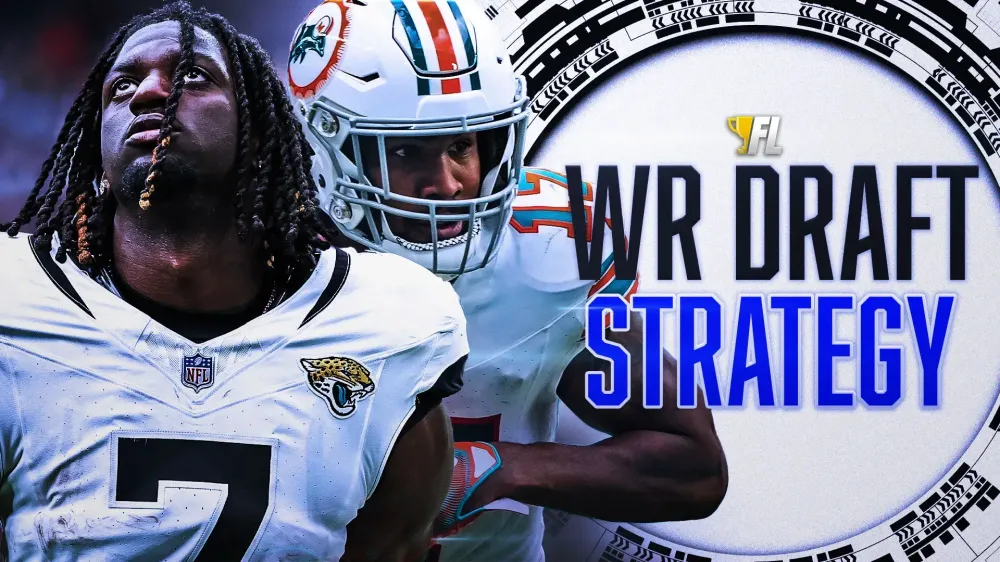
Wide Receiver Draft Strategy For Fantasy Football 2025: Brian Thomas, Jaylen Waddle, and More Draft Pillars
Dwain McFarland breaks down his draft strategy specific to the wide receiver position for the 2025 fantasy football season.
When developing our strategy for drafting fantasy football teams, there are three key factors to consider:
- Positional supply and demand: How many do I need, and how many are available? League scoring and starting roster requirements are enormous factors that many fantasy players don't consider.
- Value: Can I target mispriced assets that offer similar value at this position later? The more confidence we have in this answer, the more we can consider not spending early picks on the position. These players become pillars within our strategy.
- Draft capital allocation: How much have I spent on this position? As a rule of thumb, the more we spend earlier in drafts, the less we will invest later, and vice versa.
Using these simple concepts, along with our fantasy football rankings—which consider your custom scoring and roster settings—we can create an adaptable framework for drafting.
Every fantasy season, our strategy can differ depending on where positions and players go in drafts. Fortunately, we can access average draft position (ADP) data from all the major sites to help identify the positions where we are most comfortable waiting and which we need to attack early.
Today, we will analyze the WR landscape with these factors in mind to unveil the optimal wide receiver draft strategy for fantasy football 2025. If you haven't checked out my WR Tiers piece, it contains crucial research that serves as the backbone for the 2025 strategy.
Of course, WR is just one of the positions! The strategies for QB, RB, and TE are already available, and the complete draft strategy guide will drop next week!
Use the Code: Dwain to get 20% off any Fantasy Life+ subscription.
Wide Receiver Supply and Demand
Starting lineup requirements
Most fantasy leagues require you to start two to three starting WRs and a flex position. That means in a 12-team league with three starting WRs, there will be 36 starters, and roughly half of the flex spots should be filled by WRs, totaling 42 starters.
Talent: The limiting supply factor
Immediately, we have a high demand for the WR position based on roster settings, but that is only half of the equation. The other factor is supply, and while it may seem like WR options are infinite because most NFL teams utilize three in their base offense, the supply is quite limited.
Any RB can enter a starting lineup and provide some sort of fantasy production because most of their points come from receiving handoffs while nine other players block. At WR, additional skill-based steps must occur BEFORE the player can score fantasy points.
- Beat their defender(s) to get open
- Get to the right place at the right time based on coverage
- Catch the ball
- Run after the catch
Playing time alone doesn't unlock WR fantasy points. Targets are the lifeblood of fantasy points, and targets are talent-driven. This fact burdens supply—only so many WRs meet the job requirements. In sharp fantasy leagues, if all the managers knew this, it would be almost impossible to find WRs on the waiver wire outside of some early-season outliers because, for the most part, we know who the good players are.
Strategy bonus: because backup RBs suddenly in a starting role are more likely to produce fantasy points than backup WRs entering the lineup, we can build SUPER TEAMS by cornering the market at WR and aggressively attacking the waiver wire at RB.
Wide Receiver Historical Scoring
The excellent news for talented WRs is that they don't have to deal with the nasty rotations that coaches talk themselves into at the RB position. The best WRs are mainly on the field unless they play in a hyper-crowded offense with multiple stars.
When you pair this with lower injury rates than the RB position, WRs historically make up a larger percentage of top fantasy scorers in PPR and half-PPR leagues after the top 12, making them stronger bets as flex options.

By now, you are probably thinking—wow, I need to prioritize WRs in my draft—and you are correct. But to craft the perfect draft strategy, we must account for average draft position (ADP) to determine where the value pockets are and how that might impact our plan.
WR Draft Strategy Walkthrough
Before we delve into my favorite targets, I want to call out three massive value pockets for WR this season based on consensus fantasy football ADP.
- Early to Mid Round 2
- Round 6
- Round 9
There are two targets I love in Round 3, but also many I don't want to click, given their price vs. similar players later. In rounds 4 and 5, I am leaning away from WR because we can get similar profiles in Round 6.
This dovetails very nicely with the values we have identified at QB, RB, and TE.
- Round 3: Elite QB or TE
- Round 4: RB
- Round 5: RB
- Round 6: WR
Each site's ADP could require some tweaking, but we have the basic infrastructure of a robust, value-driven draft plan starting to take shape.

Rounds 1 to 3: Strategy Summary
It is always important to consider your draft position for this sort of exercise. While I won't do this for every round, it's essential to think through for all of your picks.
In the first three rounds, it is critically important because there is a tier break at WR before your second selection from an early position. Yet, the RB tier is longer and flatter.
Due to that dynamic, in PPR and half-PPR formats, I like Chase and Lamb in the first three picks. If it is a league that starts three WRs, I am taking one of those two players.
An easy way to think about this is with 2v2s. Do you prefer a start of CeeDee Lamb and Bucky Irving/Chase Brown, or do you prefer Bijan Robinson and Ladd McConkey?
- Early Position - Picks 1 to 4: Lamb/Irving vs. Bijan/McConkey; and if you miss McConkey, are you okay with Higgins/Hill? Going Lamb, you have a good shot at Brown and Irving with Omarion Hampton as a backup plan.
- Middle Position - Picks 5 to 8: Christian McCaffrey/Brian Thomas Jr. vs. Lamb/Irving?
- Late Position - Picks 9 to 12: Derrick Henry/Nico Collins vs. Malik Nabers/De'Von Achane?
Rounds 1 to 3: Strategy Pillars
 Nico Collins | Texans
- Consensus ADP: 14 (Early Round 2)
- Experience: Year 5 (Prime)
- Fantasy points per game (PPG): 17.8
Collins is a Tier 1 WR. He checks every box, and his underlying data screams two words: Julio Jones. This man simply shouldn't be going in Round 2 of fantasy drafts.
- ESPN: Pick 16
- Sleeper: Pick 14
- RTSports: Pick 15
- FFPC: Pick 17
GTFOH.
If you play on Yahoo, he goes pick 10, so sorry about that. But the rest of you folks drafting from pick six to 12 have a chance to land this BAMF in Round 2.
If you are drafting electronically, this is an immediate click with conviction. If you draft live, please have a celebratory dance prepared because you just scored.
Collins is a Round 1 fantasy talent going in Round 2 of drafts—he is a HIGH-PRIORITY pick.
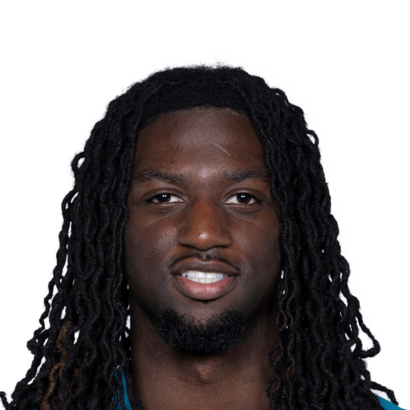
 Brian Thomas Jr. | Jaguars
- Consensus ADP: 16 (Round 2)
- Experience: Year 2 (Prime)
- Fantasy PPG: 16.5
Scoring 16.5 PPG as a rookie is pretty, pretty, pretty good. Since 2011, here is Mr. Thomas's peer group:
- Ja'Marr Chase (18)
- Justin Jefferson (16.9)
- Malik Nabers (18.1)
- Michael Thomas (17.3)
- Mike Evans (16.3)
- Odell Beckham Jr. (24.8)
- Puka Nacua (17.6)
Expect a highly consolidated attack in Liam Coen's offense in Jacksonville.
- Play 1: Throw it to BTJ.
- Play 2: Throw it to Travis Hunter.
- Play 3: Throw it to BTJ.
- Play 4: Throw it to Travis Hunter.
- Play 5: Throw it to BTJ.
- Play 6: Throw it to Travis Hunter.
- Play 7: Coach, Brenton Strange and Dyami Brown are feeling left out. Can we throw them a bone?
Thomas could finish as the WR1 in fantasyland in 2025. Run, don't walk, to your draft board if he is available in the middle of Round 2. This is a HIGH-PRIORITY target.
 Drake London | Falcons
- Consensus ADP: 21 (Round 2)
- Experience: Year 4 (Prime)
- Fantasy PPG: 16.5
London is the cover boy for why we should pay attention to data points like target share, targets per route run, and yards per route run. All of those underlying components aligned more with historical WR1 and WR2 performers, but his offensive environment was so bad that he scored 10.8 PPG in his first two years before his Year 3 breakout (16.5 PPG).
Over his final three games with Michael Penix Jr., who is willing to push the ball into tight spaces, London flourished.

Imagine a frantic robot voice:
Small sample alert!
Small sample alert!
Small sample alert!
Still, I want to get on the record stating that Penix is a good fit stylistically for a big-framed possession receiver like London. Think Jay Cutler to Brandon Marshall. Marshall averaged 170 targets in two full seasons with Cutler. For those that aren't familiar with Cutler, think Jameis Winston.
London is in his prime and locked in as the primary option in the Falcons' passing game. He is a low-end WR1 with upside, should Penix go full Cutler.
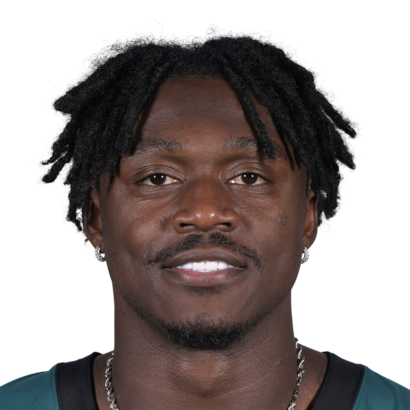
 A.J. Brown | Eagles
- Consensus ADP: 21 (Round 2)
- Experience: Year 4 (Post prime)
- Fantasy PPG: 15.1
Brown has a top-six WR skillset (33% target share and 2.99 YPRR). Unfortunately, he plays on a run-balanced team with DeVonta Smith and Dallas Goedert.
Still, with all that said, Brown was the WR7 (17.3) and WR8 (17.1) in the two previous seasons in a similar situation. Yes, the team has Saquon Barkley now. Still, it is doubtful that the team only drops back to pass on 47% of plays again in 2025. That is rare air!
We could easily see a bounce back toward the 2022 Super Bowl team—still run-oriented, but less extreme. That recipe led to a top-eight finish for Brown.
Brown is a high-end WR1 talent who should benefit from some positive regression in dropback rate. If circumstances forced the Eagles into a pass-heavy role (you laugh, but variance happens), Brown is the type of player with the skills to seize the moment.
 Ladd McConkey | Chargers
- Consensus ADP: 27 (Round 3)
- Experience: Year 2 (Prime)
- Fantasy PPG: 16.1
McConkey posted a WR1 campaign as a rookie, and his underlying data points are all in alignment (26% targets, 31% first down share, 2.38 YPRR). That remains the focal point of my analysis for the Year 2 prospect.
The arrival of Keenan Allen could dampen the high-end range of outcomes for McConkey. Still, Justin Herbert is capable of supporting two good weapons, and let's not get this twisted—we should be betting on the Year 2 ascending talent to lead this unit. Not the Year 13 vet.
It's important to note that once McConkey took his game to a new level in a full-time role. In 12 games from Week 7 through the playoffs, with a 90% route participation, he averaged 18.4 PPG.
McConkey is a WR1 talent you can draft in Round 3 of drafts—that is a value worth targeting. He is my most-drafted WR in the top 30 picks through 100 drafts.
 Jaxon Smith-Njigba | Seahawks
- Consensus ADP: 36 (Late Round 3)
- Experience: Year 3 (Prime)
- Fantasy PPG: 14.9
The former Round 1 NFL Draft pick erupted for a massive breakout over the second half of 2024. Over 10 games from Week 8 to 18, he averaged 17.7 PPG with an 82 Utilization Score (out of 100).

The 2025 season brings drastic changes to the Seahawks offense, but Sam Darnold is similar to Geno Smith. Darnold is willing to spin it into tight windows in the intermediate ranges of the field where JSN thrives.
Smith-Njigba is my most drafted WR in the first three rounds of drafts through 100 entries. He is on 26% of my teams. He is a HIGH-PRIORITY TARGET in Round 3 of drafts—especially if you need a WR.
Rounds 4 to 6: Strategy Summary
These rounds are the sweet spot for WR values in 2025 (mostly Round 6). Four of my five most drafted WRs inside the first 72 picks come from this range (100 drafts).
As you can see in our Best Ball Player Exposure tool:

 Tetairoa McMillan | Panthers
- Consensus ADP: 66 (Round 6)
- Experience: Year 1 (Pre-prime)
- Fantasy PPG: N/A
McMillan is my WR19 in the Fanasy Life rankings. The only reason my exposure through 100 drafts isn't higher: Underdog drafters are hip to McMillan.
I am right in line with ADP on Underdog, but McMillan offers MASSIVE value on every other platform. He is WR29 on average.

McMillan graded out highly in the Rookie Super Model. T-Mac hogged 30% and 34% of Arizona's targets in his final two seasons. His peers from the model beat a WR29 finish 65% of the time in Year 1.
McMillan is a PRIORITY TARGET, and I am willing to reach for him in Round 5 if I am aiming for two WRs from this group.
 Xavier Worthy | Chiefs
- Consensus ADP: 54 (Round 5)
- Experience: Year 2 (Prime)
- Fantasy PPG: 10.7
Worthy came on strong once given a full-time role. He barely played in Week 18 with starters resting, but in the other seven games from Week 14 through the Super Bowl, he averaged an 87% route participation and put up considerable numbers.
- PPG: 19.0 (WR1-worthy)
- Targets: 25% (WR1-worthy)
- Air Yards: 21% (WR5-worthy)
- YPRR: 2.13 (WR2-worthy)
He also averaged 1.1 rushing attempts per game over that stretch, as the No. 1 playmaker for the Chiefs. There was virtually no competition for targets outside of an aging Travis Kelce, who was offering very little after the catch when given opportunities.
We don't know how Worthy's numbers will look when Rashee Rice returns, but there is room for two valuable fantasy WRs with Mahomes. He is a high-end WR3 with upside.
 Jameson Williams | Lions
- Consensus ADP: 64 (Round 6)
- Experience: Year 4 (Prime)
- Fantasy PPG: 13.8
In his first full season as a starter, Williams pulled down a WR2-worthy season. If you look up the definition of playmaker, you will find a picture of this man. He can attack every level of the field and score from anywhere. Jamo's 8.5 yards after the catch average doubled that of WRs with a similar aDOT since 2011 (4.2).
The Lions are a crowded offense, but they are also a high-quality unit. That insulates us from downside, given Williams' price tag of WR27. The thing we have to ask ourselves is, what if they expand his role? He has the skills to do more. Or what if injury opens the door for more?
Ask yourself this question: Do you want to live in a world where Jameson Williams isn't on your roster if he gets a 25% target share? I don't.
If it doesn't happen, no big deal—we drafted him as a WR3!
Williams is one of my favorite small-miss, big-hit bets on the board in 2025.
 George Pickens | Cowboys
- Consensus ADP: 64 (Round 6)
- Experience: Year 4 (Prime)
- Fantasy PPG: 12.4
Pickens hasn't broken out with a massive fantasy season, but the underlying data maps to WR1 and WR2 historical finishers. Now he gets to play in a pass-friendly offense with Dak Prescott in Dallas.
Prescott will be the best QB Pickens has ever played with. In Prescott's last two healthy years, he averaged 272 passing yards and 2.2 TDs per contest. There is room for CeeDee Lamb as the No. 1 with Pickens as the No. 2, and Jake Ferguson as the No. 3 in this attack.
Going back to 2011, post-third-year breakouts have often (53%) been accompanied by a significant offensive environment change (i.e., a trade or QB change). Pickens is ripe for an eruption campaign.
Pickens offers underlying WR1 to WR2 traits and has a new lease on his NFL career. He is my third-most drafted WR (13%) inside the first seven rounds in 100 drafts.
Travis Hunter | Jaguars
- Consensus ADP: 68 (Round 6)
- Experience: Year 1 (Prime)
- Fantasy PPG: N/A
My process is very talent-centric, and despite the potential for playing-time challenges, Hunter's upside scenario keeps me coming back for more. He grades out as the fifth-best WR all-time in the Rookie Super Model with a rating of 93 and has the top mark in the class.
I only have Hunter projected for a 78% route participation, much lower than the 90%+ we often see from players of his caliber. Still, the ceiling-floor model projects an upside of 17.5 points per game, which would thrust him into the top 12 receivers as a rookie. Expect Hunter to receive plenty of looks when he is on the field in an offense that should consolidate around Brian Thomas Jr. and Hunter.
Hunter is my most-drafted WR (27%) through 100 drafts. Could he bust? Yes. Could he be one of the best WRs in the NFL right away? Yes. The price is right for that sort of home-run swing.
Rashee Rice | Chiefs
- Consensus ADP: 57 (Round 5)
- Experience: Year 3 (Prime)
- Fantasy PPG: 21.6 (three healthy games)
Rice's disciplinary hearing is set for September 30th. Albert Breer sees this as a five-to-six-game suspension. Drew Davenport sees it in the four-to-five range, but upped the chances of six based on factors that might be behind the odd timing of Rice's hearing. Davenport sees it as a suspension that will occur this season. Rice is also recovering from an LCL injury he suffered in Week 4 of last season, but all reports are that he looks fantastic in camp.
You won't have Rice for a portion of your fantasy season, but it is hard to ignore what he has done in his first two years as Patrick Mahomes' favorite weapon. Since taking over the starting role in Week 14 of 2023, Rice has averaged 17.8 PPG.
Xavier Worthy picked up steam at the end of last season and will have some runway to establish himself early in the year. But even if Worthy gets going, that doesn't mean Rice can't pay off. We are talking about Patrick Mahomes and Andy Reid. That duo can support multiple weapons.
Rice requires patience, but you are probably getting a WR1 when he returns. That sort of certainty isn't easy to find this late in the draft. Can you build a roster to offset for Rice until he returns? If so, (I think it is very plausible) draft this man.
 Calvin Ridley | Titans
- Consensus ADP: 71 (Late Round 6)
- Experience: Year 8 (Post prime)
- Fantasy PPG: 11.8
Ridley isn’t young and has long teased fantasy managers, flashing WR1 talent in spurts. The underpinnings of his data profile tell a similar story:
- Target share: 24% (WR3-worthy)
- First down share: 26% (WR2-worthy)
- YPRR: 1.86 (WR3-worthy)
- Air yards share: 44% (WR1-worthy)

Last year’s WR3-level YPRR came with shaky QB play; rookie Cam Ward should be an upgrade. Post–DeAndre Hopkins, Ridley hit a 26% target share and 14.1 PPG. With little target competition, a WR2 finish is in play—though I still can't get his target share high enough to match Ian's expectations of 1,734%.
Ridley comes off the board as the WR31, which is probably around his floor, and he offers WR2 upside.

Rounds 7 to 9: Strategy Summary
Things slow a little on the WR front in Rounds 7 and 8, but there are a couple of names I like. Plus, you could see fallers from Round 6. You can also get a head start on the glut of options in Round 9 in Round 8 if you are weak at the position. It's a great range to inject young upside into your WR squadron.
 Jaylen Waddle | Dolphins
- Consensus ADP: 74 (Early Round 7)
- Experience: Year 5 (Prime)
- Fantasy PPG: 9.7
Waddle has posted WR2 seasons in three of four years (15.5, 15.0, 13.6, 9.7 PPG). In 10 healthy games with Tua Tagovailoa last year, he averaged 12.4 PPG.
IN 2022 and 2023, his underlying data was robust.
- First downs: 25%, 27% (WR2-worthy)
- Targets: 21%, 23% (WR2-worthy)
- YPRR: 2.59, 2.69 (WR1-worthy)
In an offense that subtracts Jonnu Smith and maximizes motion and play action, Waddle has outs for a rebound:
- Tagovailoa remains healthy
- Tyreek Hill hits the age cliff → Waddle becomes the No. 1
If both of those happen, he could offer a WR1 ceiling. Davante Adams had a similar profile heading into Year 5 and erupted onto the WR1 scene with a healthy Aaron Rodgers.
Waddle is a WR2 profile with WR1 upside that you get to draft as a WR3. He is my third-most drafted WR thanks to that combination.
Rapid Fire
Okay, we have a decent amount of ground left to cover, so we will go rapid fire. If you want more details, check out my WR Tiers, Breakout WR series, and dynasty rookie rankings with Super Model data.
For reference: My most drafted WRs from pick 73 to 120 on Underdog through 100 drafts.

Youth Infusion:
- Ricky Pearsall | 49ers (98 ADP): The 49ers' receiving depth chart is in shambles, and their first-round pick from 2024 will get a chance to shine early. In his final two games, once in a full-time role, he averaged 23.8 PPG with a 22% target share. Pearsall is climbing rapidly in best ball drafts—he has climbed five spots in the last week. If you need upside in your receiver room, Pearsall is a PRIORITY TARGET.

- Emeka Egbuka | Buccaneers (109): Egbuka is an excellent prospect. His camp buzz and the lingering Chris Godwin ankle injury have drafters frothing at the mouth. He is one of my most-drafted WRs (25%) thanks to price and a myriad of outs. That number was in the 30s, but Egbuka's ADP is up seven spots over the last week. Egbuka is a PRIORITY TARGET.
- Matthew Golden | Packers (99): This one is simple. Matthew Golden is a Round 1 NFL Draft pick going in Round 9 of fantasy drafts. He might not be a perfect prospect, but the Packers like him, and he is likely headed for a full-time role from the get-go on an offense without a target hog. Golden is a PRIORITY TARGET.
- Jayden Reed | Packers (103 ADP): Reed is one of the most mispriced WRs based on my WR Breakout research. His historical comps fall in the same range as Jaxon Smith-Njigba, but you get a massive discount. His closest peers in the study posted a WR2 or WR1 finish 64% of the time in Year 3. Not bad for a Round 10 pick! Note: Reed is battling an undisclosed foot injury that could put his early season in jeopardy, which dampens his outlook.
Veteran starters:
- Jakobi Meyers | Raiders (90): Meyers averaged 15.4 PPG after the departure of Davante Adams last year. That might be his ceiling, but he is locked into the No. 2 role for the Raiders. Geno Smith dropped dimes to a similar archetype in JSN last season, keeping a WR2 finish on the table. Meyers is an excellent fuel stabilizer if your engine is running rich on unproven youngsters.
- Jauan Jennings | 49ers (98): The world has moved on to Pearsall as the man to draft for the 49ers. I love me some Slick Rick, but Jennings is also a worthy target. His comps in my late breakout research offered a top-24 finish 40% of the time the following season. Jennings is a WR3 with WR2 upside, getting drafted as a WR4.
- Chris Olave | Saints (84): Let’s be blunt: the QB room is awful, and Olave battles injuries. So why mention him? His profile suggests WR1 upside despite a WR35 ADP. At WR, talent is the key ingredient, and Olave has it. I’m not aiming to be overweight on him in drafts, but in this range, he’s worth a shot—because if things break his way, he has the skill to outproduce expectations dramatically.
- Cooper Kupp | Seahawks (100): Is he old? Yes. Is he washed? Probably. Is he a starting WR you can plug into your early-season lineups? Yes. Kupp is a roster-construction-based bet. If you opted for younger talents with uncertain roles in previous rounds, Kupp is in play. Think Adam Thielen two years ago.

- Khalil Shakir | Bills (104 ADP): The Bills extended Shakir with a $53M contract, and he has improved every season. Last year, he posted a 23% target share and 2.15 YPRR while averaging 12.1 PPG. He is a high-end YAC player tethered to one of the best QBs in the league. This man has more outs than getting credit for as the WR46 in drafts. I would have him higher, but a high-ankle sprain could hamper his start to the season.
Rounds 10+: Strategy Summary
You don't need a Week 1 starter, but want some upside depth:
- Jayden Higgins | Texans (125): The Texans' Round 2 pick is splitting time so far in the preseason, but he has a path to the WR2 role opposite Collins.
- Rashid Shaheed | Saints (134): The offense sucks. Shaheed is a baller. Where does that combination get you? Let's see how this plays out on my bench, and if the Saints surprise, we have a starting WR.
- Luther Burden | Bears (145): Burden missed a large chunk of the offseason but is practicing. He offers the sort of YAC skillset we could see Ben Johnson scheme up in a big way.
- Marvin Mims Jr. | Broncos (149): Mims notched a surprising 82% route participation with the starters in Week 1 of the preseason. That might not stick, but it should have our attention. He was a strong prospect in the Rookie Super Model and has exhibited playmaking ability. In an offense that designs looks for its playmakers, Mims could obliterate his late-round price tag.
- Kyle Williams | Patriots (150): Williams is still working his way up the depth chart, but this feels like it is only a matter of time. He has looked good as a separator, and the Patriots need playmakers on the field.
- Cedric Tillman | Browns (160): Tillman is the favorite for the No. 2 role opposite Jerry Jeudy. He averaged 18.1 PPG in four healthy contests as the starter last season. He won't have Jameis Winston to propel his stats, but Tillman has traits worth drafting late.
You need someone to plug in early while your younger picks get going:
- Keenan Allen | Chargers (151): Fat Keenan notched a 27% target share last year. Were they layup targets? Yeah, but who cares? This is fantasy football. We aren't running an NFL team. We just want catches and yards. Back with Justin Herbert, Allen could easily be the WR2 behind McConkey.
- Christian Kirk | Texans (142): The young duo of Higgins and Jaylin Noel could spell bad news for Kirk as the season progresses. However, he is a favorite to get easy looks from the slot early in the season.
- Josh Palmer | Bills (170): Palmer is a fine early-season backfill option, but color me skeptical on his ceiling. It is true that a change of scenery can help unlock late breakouts, but I would be more into that narrative had he not already played with Herbert in an offense needing another WR to step forward.
- Adam Thielen | Panthers (165): Thielen (34) is getting way up there, and the Panthers have added big-time target competition in McMillan. Still, Thielen could be the WR2 for this team early in the year.
- DeMario Douglas | Patriots (180): Josh McDaniels has a long history of feeding his slot WRs and the Patriots pecking order is up for grabs behind Stefon Diggs.
You have an IR spot to burn:
- Brandon Aiyuk | 49ers: (123): Aiyuk is recovering from an ACL/MCL injury, and we probably won't see him until October at the earliest.
You need a flyer in a deep league (12+ teams, 20+ player rosters) or have taxi slots:
- Isaac TeSlaa | Lions (238): TeSlaa has been a human highlight reel at camp and in the preseason. The Lions swapped Round 3 picks in 2025 and traded away two Round 3 picks in 2026 to get this man. Given his momentum, don't be surprised if he takes Tim Patrick's job as the WR3 immediately. If something happens to one of the other Lions pass catchers, there is strong contingent upside. TeSlaa is one of my FAVORITE LATE-ROUND DART THROWS.
- Tory Horton | Seahawks (221): Horton is probably going to take Marquez Valdes-Scantling's job at some point this season. He offers an outside vertical presence to help open things up for JSN and Kupp.
- Dont'e Thornton | Raiders (204): Dont'e big. Don'te fast. Don'te running with the first team. Dont'e didn't do jack squat in college. Wide range of outcomes here.
- Jaylin Noel | Texans (218): The Texans rested their first-string offense in Week 1 of the preseason, but Noel was getting in work with Higgins on the first three drives.
- Jalen Coker | Panthers (235): Jalen Coker is good at football and has a sneaky chance to earn a starting role away from Xavier Legette or Adam Thielen. Let's go, cokeheads!
- Adonai Mitchell | Colts (206): Mitchell was a complete bust as a rookie but flashed some of the underlying traits that keep our hopes alive (25% TPRR).
- Jalen Royals | Chiefs (217): Royals is likely the odd-man out this season, but he could turn heads while Rashee Rice is out. If that happens, he could push for more playing time.
- Diontae Johnson | Browns (234): Johnson is working behind Jamari Thrash in camp, but he is a proven target earner. That makes him the better dart throw for me.
- Roman Wilson | Steelers (234): The Steelers Round 3 pick lost his rookie season to injuries, but could push for WR2 duties in Year 2. The depth chart is weak behind DK Metcalf.
- KeAndre Lambert-Smith | Chargers (299): The Allen signing stole some of the thunder from KLS, but the rookie has made consistent noise through the preseason.
Wide Receiver Draft Capital & Strategy Guidelines
Knowing where the value pockets are at WR in drafts, we can now set some guidelines for our draft strategy.
Note: If you play on a platform other than ESPN, Sleeper or Yahoo, you will want to check their ADPs and make the necessary adjustments.
Two WR + Flex Leagues
Round-by-Round Guidelines
- Rounds 1 to 3: Minimum of one WR and a maximum of two rostered
- Rounds 4 to 6: Minimum of two WRs and a maximum of four rostered
- Rounds 7 to 9: Minimum of four WRs and a maximum of five rostered
- Rounds 10+: Minimum of five WRs and a maximum of seven rostered
Additional Notes
- Remember, if you take fewer WRs early—let's say you have the minimum of two after six rounds—attack the position heavily in the following rounds and consider rostering as many as seven since your other positions should be strong.
- Based on the consensus ADP, there is more value in Rounds 9 to 10 at WR than RB, so keep that in mind when considering how you want to spend your late-round picks.
Three WR + Flex Leagues
Round-by-Round Guidelines
- Rounds 1 to 3: Minimum of one WRs and a maximum of three rostered
- Rounds 4 to 6: Minimum of three WRs and a maximum of four rostered
- Rounds 7 to 9: Minimum of four WRs and a maximum of six rostered
- Rounds 10+: Minimum of six WRs and a maximum of eight rostered
Additional Notes
- If you take three WRs in the first three rounds, you can grab one more in for your flex in the next four rounds, but at least attack two other positions. While having a strong WR corps in three-WR leagues is a cheat code, we want to avoid massive weaknesses across all other positions.
- If you only take one WR in the first three rounds, loading up in rounds four through six—especially the strategy pillars outlined above—should be a priority. Don't be afraid to take a Round 6 ADP WR in Round 5 if you need two from the group.
- If you only have three WRs heading into Round 7, you likely have two good RBs, an elite QB, and an elite TE. You are probably taking two WRs in these three picks. It's fine to reach for a Round 9 player in Round 8.
General Strategy Tips
- Monitor how your draft is going compared to the ADPs on which your strategy was created. If your league mates use sources other than the rankings and draft queue for the site, they could draft very differently. If they are hip to the fact that WRs should go earlier in three-WR leagues, be prepared to push toward the aggressive ranges listed in the round-by-round guidelines.
- Pay attention to your opponents' needs between your pick and your following selection. For example, if it is Round 7 and they all have a QB, then you can take a calculated risk to pass on the QB to take another position, knowing they shouldn't draft two. One caveat to this rule: if the players behind you don't know what they are doing or are new to fantasy, don't assume they won't take the QB—they just don't know better.
- Pay attention to the names at the top of the draft queue by position. If there is a player you want and their name is near the top of the list in the draft room, don't be afraid to reach. When opponents are on the clock and unsure who to take, they often default to names at the top of the queue or a timeout autodrafts them.
Join Our Newsletter
Trusted by 400,000+ fantasy football players. Get access to Fantasy Life's free award winning newsletter and tools, all in one step.
By registering or logging in, you agree to our Terms of Use and Privacy Policy.